Society actually exists, says Boris Johnson
How the British PM and leader of the Conservative Party rediscovered society.
Even in a deeply divided post-Brexit Britain, news that prime minister Boris Johnson had been taken to intensive care was greeted with near-universal disquiet, if not alarm. Much like his hair, Johnson cuts a jovial and bewildering political figure. A popular mayor of liberal cosmopolitan London, he famously wrote two newspaper articles, one pro and one anti-Brexit, to help him decide. An opportunist then, not an ideologue. But one with a penchant for cracking deeply offensive jokes.
On March 16 this year, as the seriousness of the Covid-19 crisis started to dawn on his government, Johnson hastily had a conference call with CEO’s of large British manufacturers to see if they could manufacture life-saving ventilators. The UK had only a quarter of the number of ventilators Germany had, and less than Italy, whose health system was already overwhelmed. Executives were stunned when he quipped that “Operation Last Gasp” was the purpose of the call.
That particular day was a red-hot news day. Professor in epidemiology Neil Ferguson of Imperial College, who sat on three scientific committees that informed the UK government emergency response, had published a paper. It predicted 510,000 deaths in the UK if nothing was done to mitigate the spread of the virus. More alarmingly, the paper indicated that the current government policy would probably mean approximately 250,000 deaths — and recommend far more stringent social distancing measures.
Only four days before, on March 12, the government’s chief medical officer, Chris Whitty, himself an epidemiologist, cheerily announced that the government would no longer attempt to trace - and therefore test - every suspected Covid-19 infection and their contacts. It was no longer necessary, Whitty said because the government was moving from a strategy of “containment” to one of slowing the virus’s inevitable spread. He claimed several weeks would still pass before the infection peaked in the population.
A day later, the government’s chief scientist, sir Patrick Vallance calmly elaborated in a TV interview. Talking down “eye-catching” measures, like banning large public events, the aim was now to stall the spread and flatten the peak of the infection. Most people need not fear the virus he assured. And when a large proportion of the population eventually becomes infected, they will have built “herd immunity”. What had already been the unspoken government policy — not to attempt to stop the virus’s spread but slow its progress had become public.
But by now, a large part of the UK’s media class had been following events in China, Italy and Spain for some time via social media. Stories like that by the New York Times on how China threw the kitchen sink at the virus and papers by the Lancet with clinical analysis of the viruses’ grim impact in Chinese hospital wards had already been shared widely. A British blogger in Spain translated frightening Madrid hospital statistics. Tragic accounts of “super-spreaders” at Italian football matches and Basque funerals escalated concern.
Amateurs quickly learned the basics of epidemic curves. Rough growth estimates were swiftly plotted and posted on Twitter. Using the 100th reported case as a benchmark, they concluded that, unlike Whitty’s assertion, the United Kingdom was only days behind Italy when it locked down. Venues started to close of their own accord. Alarmed at the lack of urgency, journalists began to ask more pointed questions of Johnson and his officials at press conferences.
In the aftermath of Ferguson’s bombshell paper, the government caved in. Regarding the number of deaths, the Ferguson paper released on the 16th did not differ significantly from those already used by government models since the beginning of February. Yet the airing of these numbers and the public demand for greater social distancing led to a swift, but still unacknowledged, change in government policy under Johnson.
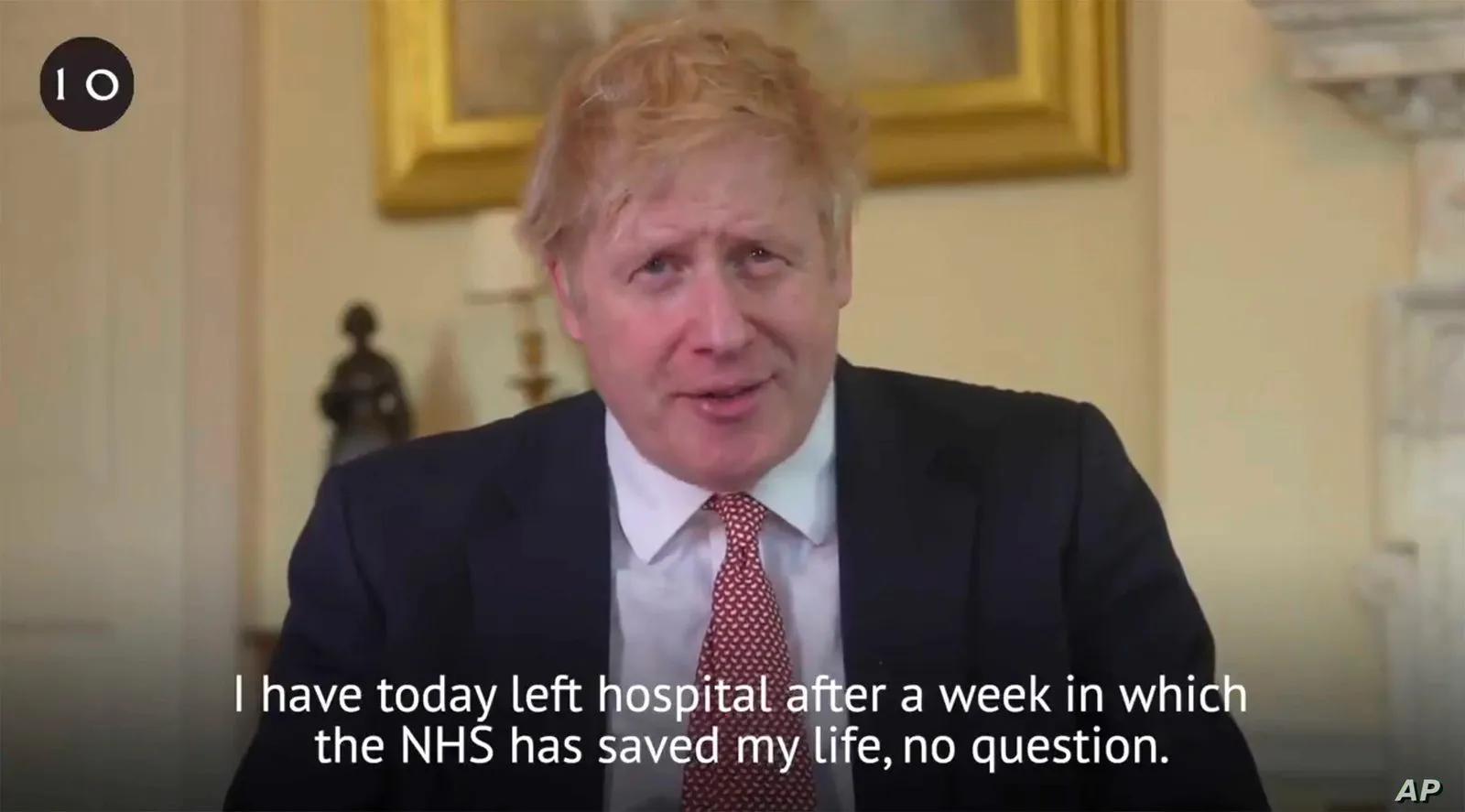
Johnson has dodged questions about his government’s initial plans for “herd immunity” and the apparent acceptance of a vast number of deaths ever since. Strict social distancing measures and, eventually, a lockdown were always the plan, they now say. These would indeed be introduced as soon as necessary. But the problem with this line of argument was that once it was policy to keep deaths to a minimum, it was not entirely clear whether there was any good reason not to order a lockdown immediately. Even from the vantage point of cold economic calculus, an early lockdown looked preferable.
During the Brexit tumult, Johnson and fellow Brexiteers regularly pooh-poohed the advice of experts. But now Johnstone felt justified in saying he was following the science and experts. A subsequent investigation by Reuters found that Johnson failed to query the assumptions his scientists had made. But also that his scientific advisors had failed to clearly articulate the number of potential deaths and the full range of options available to him, especially early on.
John Edmunds, a professor of infectious disease modelling from the London School of Hygiene and Tropical Medicine, sat on the same government advisory panels as Ferguson. In the Reuters investigation Edmunds alleged that advisors never suggested more stringent social distancing measures before Ferguson released his paper on the 16th. And this was because they second-guessed the government. They never thought locking down would be politically acceptable.
Edmunds claimed it was only when Italy implemented a national shutdown on March 10, that the “policy space” had been “opened” for similar measures to be discussed in the United Kingdom. Why it was thought to be politically impossible up to that stage remains a subject of intense speculation. Was it because scientists thought Britons prized their freedom, as Edmunds told Reuters? Or was it because they thought government could not countenance the economic cost of a shutdown?
Only three months before, in December 2019, Johnson won his first election with a historic majority on the simple promise to “get Brexit done”. This was despite dire predictions from most economists and the Bank of England of the damage it would do to the British economy. The opposition to Brexit was fierce, from a broad and influential coalition of London-based businesses, the legal fraternity, academia and many on the left as well as some Conservatives.
Johnson, advised by the enigmatic but cunning strategist Dominic Cummings presented Brexit as a struggle between the ordinary people against an out-of-touch elite. As a fallback position, a hitherto unthinkable argument was raised. Even if the experts were right about the economy, why put it above British national sovereignty? Homo economicus was living on borrowed time in Britain.
This Brexit struggle was not just a gentlemanly battle of ideas. Johnson showed he had a ruthless side. To marshal the full support of the fragmented Tory parliamentary party, even venerable senior members of Margaret Thatcher’s cabinet, like the former Chancellor of the Exchequer Kenneth Clark, and a grandson of Winston Churchill, Nicholas Soames, along with twenty-one other members of parliament, were cast aside and expelled from the party.
Thatcher, who had famously led Britain into the European single market, is still a deeply polarising figure in British politics. The speech opening her campaign to join hailed “A single market without barriers—visible or invisible—giving you direct and unhindered access to the purchasing power of over 300 million of the world’s wealthiest and most prosperous people.”
When in 1987, she told an interviewer that “there is no such thing as society, only individuals and their families”, it was seen as a shocking but fitting description of her and the Tory Parties’ political philosophy that greed and selfishness are good. Yet Thatcher’s embrace of the single market was ideologically coherent. If we are all individuals, and society a mirage, then borders are a pointless hindrance.
To break the opposition to Brexit in the legislative chamber, Cummings honed the campaign message to the populist “the people versus parliament”, which Johnson embraced with enthusiasm. He further garnished it with words like “betrayal” and “surrender”, escalating the rhetoric. In an act of staggering callousness, he casually claimed that to “get Brexit done” would bring honour to the murdered Labour MP Jo Cox. Cox opposed Brexit in a constituency that supported it narrowly. One week before the Brexit vote, a lone attacker brutally shot and stabbed her to death on a public street. At his trial, Cox’s attacker, when asked to give his name, answered: “Death to traitors. Freedom for Britain.”
Before Johnson’s triumphant 2019 election, conservative think tanks pinpointed the voters that mattered most to get a clear majority. Several London seats fell in 2017 to Jeremy Corbyn’s Labour Party, and polls showed that more was likely to do so in 2019. To win, the Conservatives had to break the so-called red wall and win the votes of former working-class Labour voters in the North of the country. These were voters who had voted for Brexit. Johnson’s message to them was simple but effective. Cosseted London had ignored them for too long. His government would turn away from Europe and towards them, “levelling up” their regions with London and showering the neglected but beloved NHS with investment.
Not many people, including the Labour Party, took the Conservative Party’s open assault on Labour’s Northern red wall seriously. Did Johnson, a posh Eton-educated Tory believe what he was saying, and more importantly, would these voters? He had, after all, spent a decade in the senior echelons of the Conservative government, a government which had cut spending on welfare and the NHS and had neglected the North of the country.
On January 13 2020, the day Thailand confirmed the first Covid case outside of China, one of the government advisory committees Ferguson and Edmunds sit on met for the first time to discuss the threat of a new coronavirus in China. The committee did not advise raising the threat level, claiming the data coming out of China was confusing. The previous day, to speed the global development of diagnostic tests, the Chinese had made the genetic sequence of the virus available worldwide via the World Health Organisation. On the 15th and the 20th of January, Japan and South Korea, respectively, identified their first cases. By the end of January, it was clear to Johnson’s advisors that the virus had “pandemic potential”, yet the threat level was advised to be kept on “low”.
On January 31 this year, when Hubei had already been under lockdown for more than a week, Italy reported its first case of the virus, declared a state of emergency and suspended all flights from Wuhan. That night Johnson gave a televised address. “This is the moment when the dawn breaks and the curtain goes up on a new act in our great national drama.” he intoned. It was the start of a conciliatory and optimistic speech about Brexit, that did not mention the virus or indeed Brexit once, the word having been banned from government communications. Instead, it focussed on the possibilities for Britain now that it had “recaptured” sovereignty from Brussels.
Only seven weeks later on March 23, more or less on the timeframe the amateur social media epidemiologists had predicted, Johnson placed the United Kingdom under lockdown. It was only seven days after Whitty claimed the peak was still weeks away. Three days later, having been on the back foot because of his government’s shambolic pandemic policies for weeks, Johnson faced the further embarrassment of coming down with Covid-19 symptoms himself. As deaths and criticism continued to mount, he was hospitalised a week later on April 5. Still, people were shocked when the following afternoon, he was shifted to an Intensive Care Unit himself.
On the day he discovered his symptoms, Johnson had joined a nationwide clapping session to thank the NHS’s workers. But perhaps the most abiding image of Johnson in the short period of his premiership so far, was a remark uttered in a video broadcast, self-made on his phone in Covid isolation. Its purpose was to thank the 20,000 ex-NHS workers who had answered his call to return to the service to help, as well as the 750,000 people who had volunteered to help do things like distribute food packages to the vulnerable. This proves, Johnson said, that “there really is such a thing as society.”
This essay first appeared in Afrikaans in the Vrye Weekblad.
First published at leviathan.substack.com.