Trump's New Coalition: A Blueprint for Authoritarian Plutocracy
How a fusion of MAGA loyalists, disaffected workers, young men, and tech billionaires could reshape American democracy

Two weeks after the U.S. elections, I’ve moved from oscillating between alarm and calm about Trump’s potential re-election to deep concern.
The election produced surprising results. Voter turnout dropped from four years ago, yet Trump became the first Republican in over 20 years to win a popular majority. Though his margin was not that big, it was smaller than Biden’s or Obama’s victories, this Republican milestone marks a significant shift.
Trump’s coalition consists of three distinct groups:
-
The hardcore MAGA right: Politically active, media-consuming and producing, right-wing, often including blood in soil nationalists, including a larger portion of the white working class than previously seen.
-
A group of influential super-rich men, crucial not for votes but for other reasons.
-
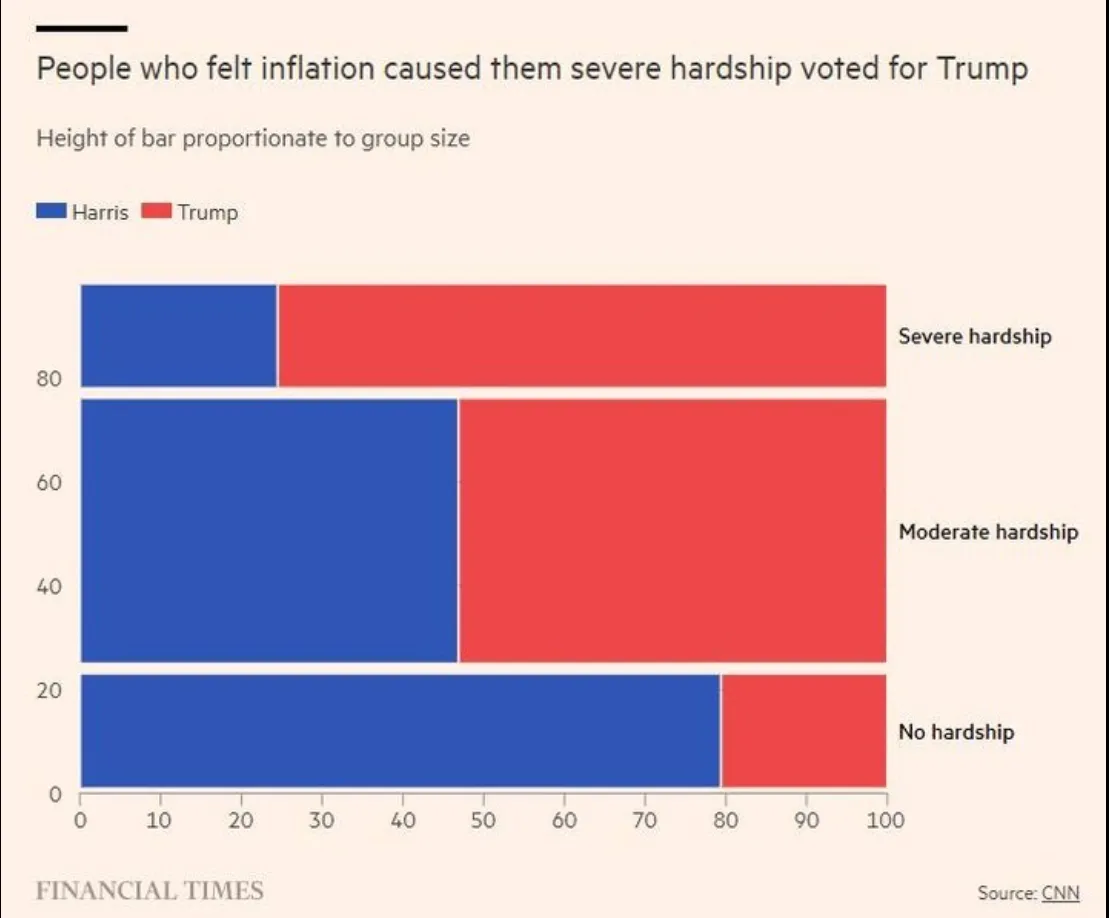
The swing voters who secured his victory: Less ideological, often working class men, spanning all races, and notably disconnected from news media. Those reporting economic hardship due to inflation disproportionately supported Trump.
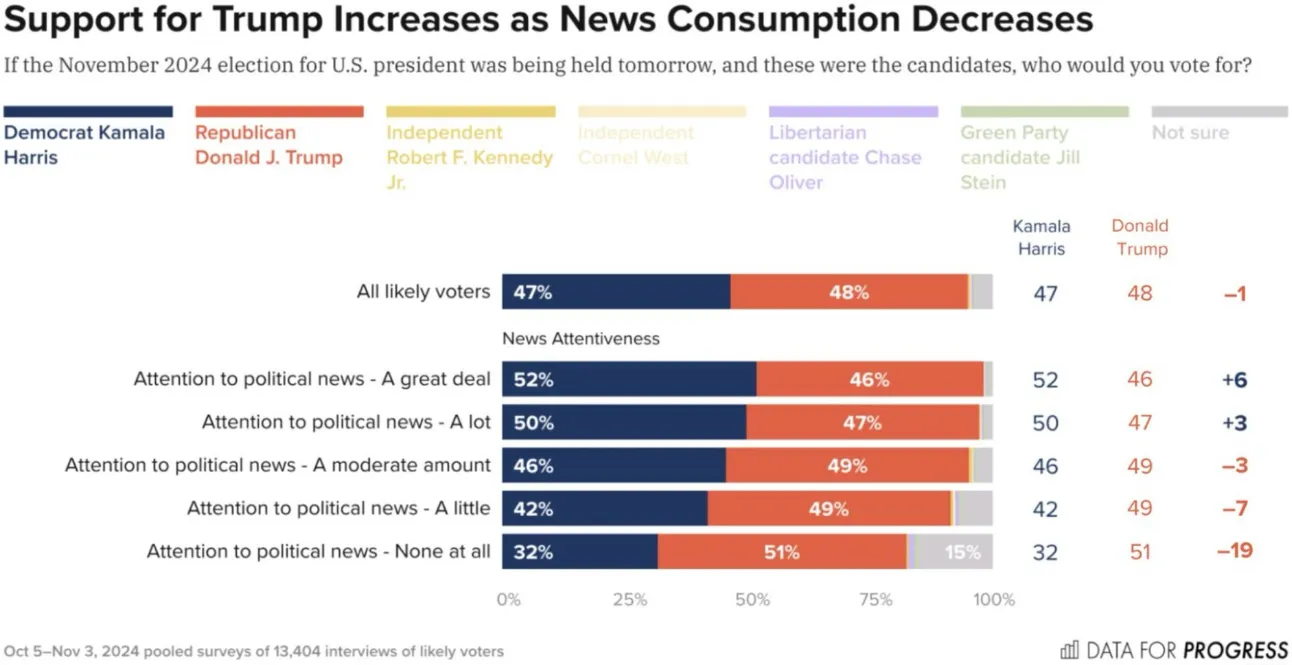
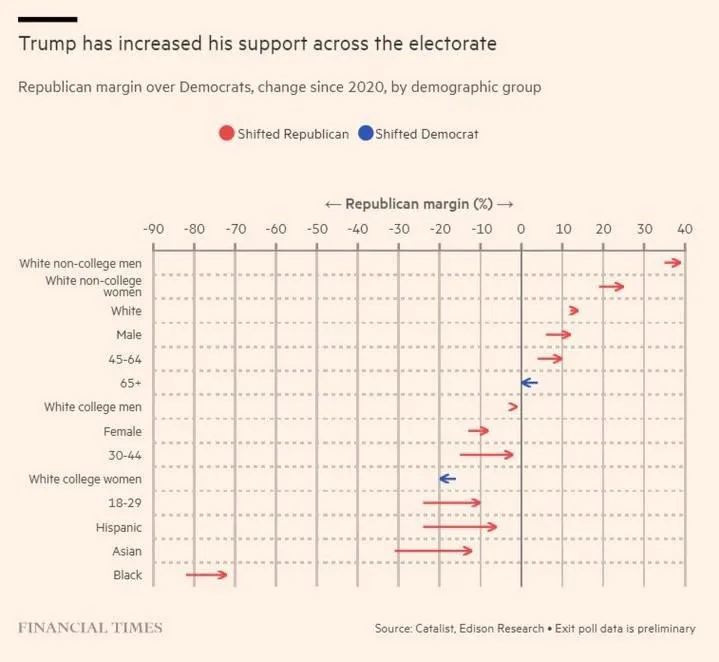
The voting patterns showed clear trends. Most demographics swung toward Trump, with two exceptions: university-educated white women and those over 65, who favoured Harris. Young men and minority men showed the strongest swings toward Trump, while educated white men showed modest movement.
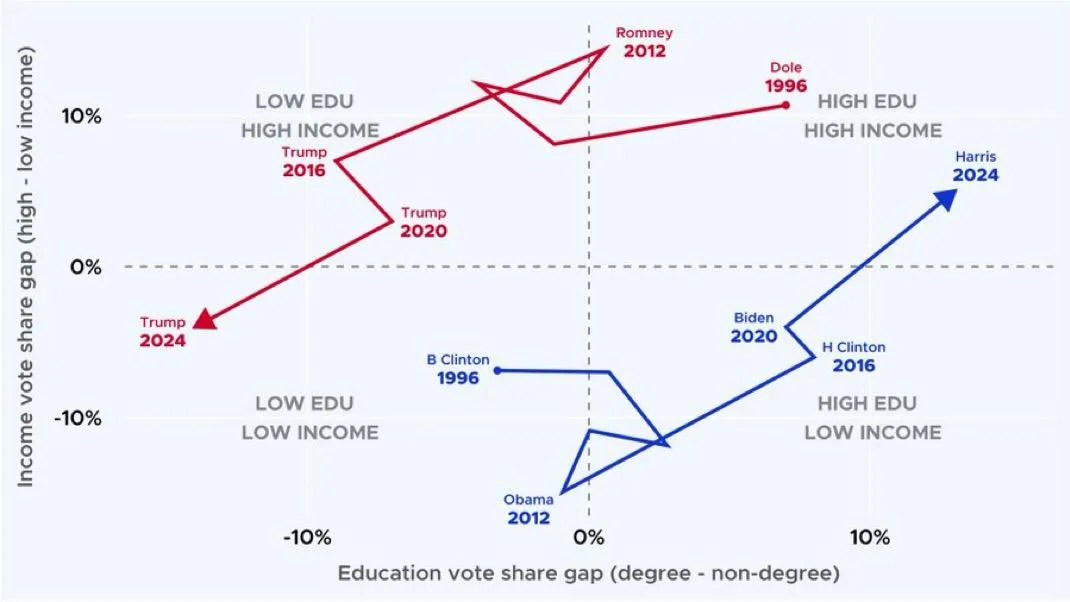
Adam Tooze offers insight into this coalition’s dynamics. American society divides into three layers he says: working class, managerial class (educated middle class), and super-rich. The working class resents both rising inequality, property prices and the managerial class’s cultural authority, including policing things like what pronouns we all must use. The super-rich, unbounded by social constraints, appeal to working-class voters precisely because they can defy these mandates.
Sociologist Dylan Riley highlights a crucial status shift with respect to gender: White working-class men without degrees have fallen from 7% above average income in 1980 to 12% below today while degree-holding white women now earn 18% above average. A status reversal.
So what is Trump going to do?
Here I am just going to focus on the domestic outcome. We have a habit in democracies of discounting what politicians say because they are media-trained to be so slippy in reaction to the media’s penchant for got-ya soundbites. Which is why we often get authoritarians like Putin so wrong. Similarly, one should take what Trump has said repeatedly seriously. We can say without a doubt he does not care much about abortion, but if it helps his cause to be anti-it, he will be. We can say he cares about money, power and himself. His core beliefs include:
-
Mercantilism and tariffs over free trade (A theme of his since the 80’s)
-
Strong anti-immigration stance
-
A desire for revenge against perceived enemies
Dictator on day one
Trump declared he would be a dictator “on day one,” leaving open how long this might last. When Time magazine questioned whether Americans’ attachment to democracy would prevent this, he dismissed the concern, asserting Americans would welcome it. Combined with his initial appointments, this statement severely threatens democratic institutions.
His appointments reveal a dangerous strategy to back this threat, as analyzed by Anne Applebaum and Ezra Klein, as well as in this excellent podcast with sociologist Dylan Riley. His strategy targets the government’s most powerful arms—military, intelligence, and Justice Department—with appointees whose only viable future lies in absolute loyalty to him. Consider his choices: Pete Hegseth, a Fox host who denies germ theory, for Defense Secretary; and Matt Gaetz, tainted by serious allegations and shunned by his own party, for Attorney General.
The Gaetz nomination particularly reveals Trump’s intent. By forcing Senate Republicans to confirm someone they despise, Trump transforms the appointment into a loyalty test for the entire party.
The implications are clear: These appointments position Trump for retribution. Through Gaetz, he gains the FBI’s investigative powers to target Biden’s family and hostile and noncompliant generals. Through Gabbard, he can dismantle intelligence agencies. Through Kennedy at Health, he can undermine other government institutions. These aren’t appointments for governance but for revenge and busting through norms and guardrails.
Neoliberalism’s end
Trump’s presidency marks neoliberalism’s end, with two possible successors:
-
Genuine working-class populism is represented by figures like Vance and his convention speech, as well as organisations like American Compass. If this is it, Democrats can build alliances with the Republicans.
-
More likely: A hyper-libertarian vision led by oligarchs, gutting state protections (state capture, South Africans know all about it) while enabling widespread corruption, also represented by Vance (which just shows the confusion in the party at the moment).
The constitutional guardrails may prove insufficient against this onslaught.
First published at leviathan.substack.com.