AI does the maths, humans still ask the questions
AI now solves problems that defeated great mathematicians. Choosing which problems are worth solving is still ours.
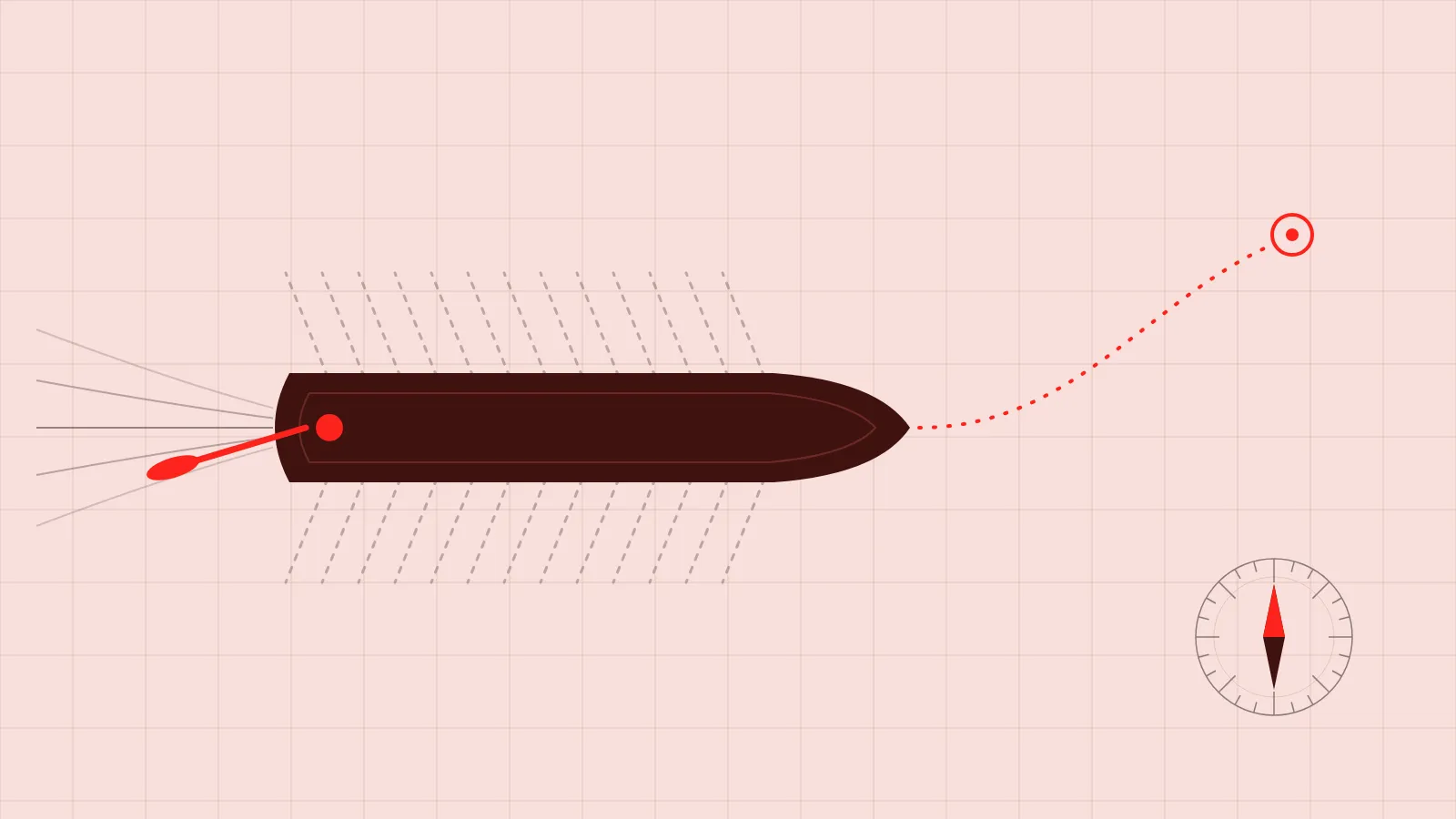
Arvind Narayanan and Sayash Kapoor argue that AI is a “normal technology”, and I am drawn to their position. Something like electricity: incredibly powerful, but its impact is still shaped by how people adopt it. They predict that “an increasing percentage of human jobs and tasks will be related to AI control.”
That is a claim about who stays in charge: us. It’s not about how capable the systems become. In a keynote at ICML, a major machine learning conference, in Seoul this July, Narayanan offered a metaphor to go with it: when engines replaced rowing, the human jobs didn’t go away; they moved to steering, to deciding where the ship should go. We stay in charge.
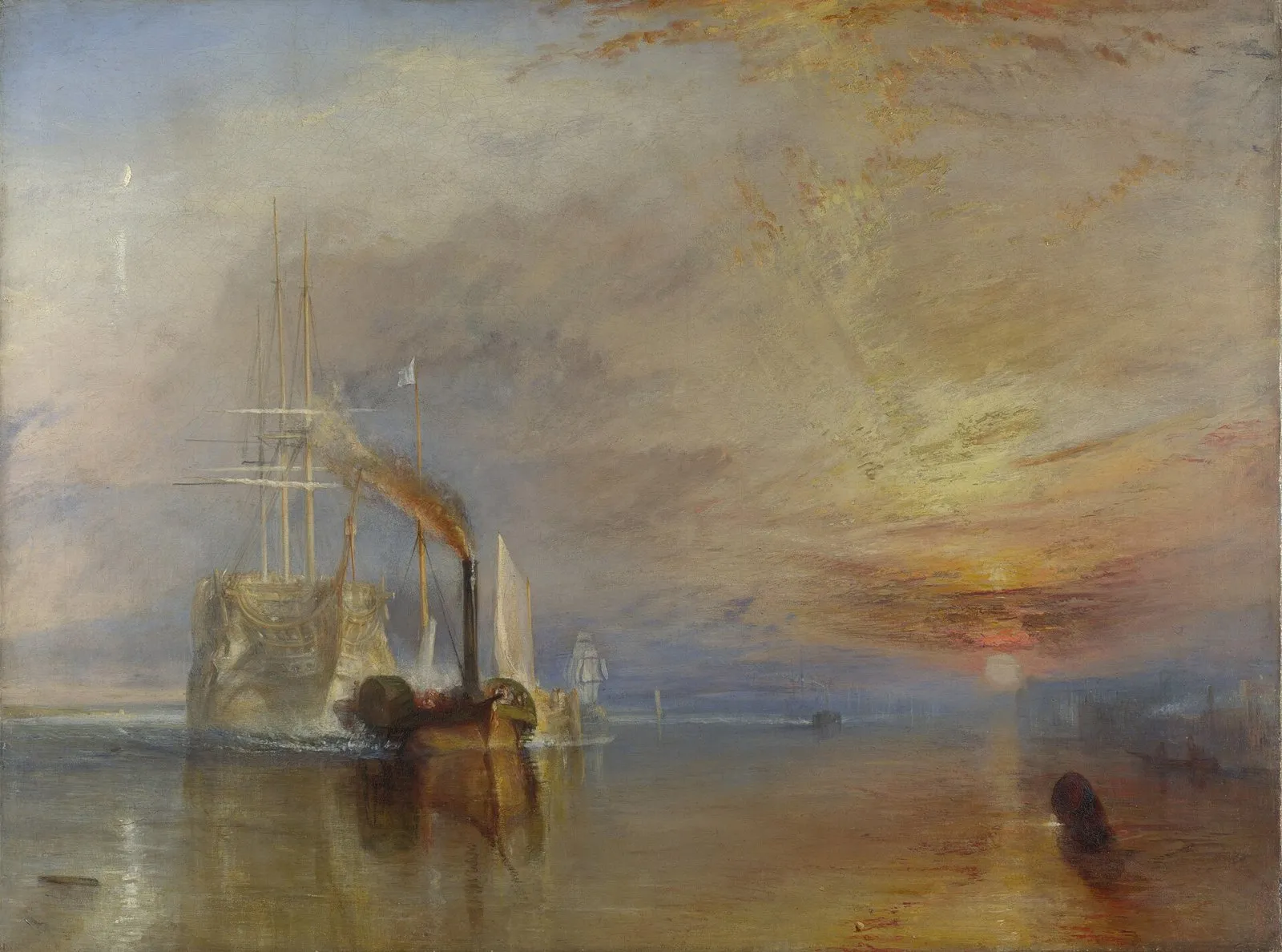
J. M. W. Turner, The Fighting Temeraire, 1839: a steam tug tows an old warship to be broken up. National Gallery, London. Public domain, via Wikimedia Commons.

But how much of my fondness for their position is motivated reasoning? Are they confirming my biases in the AI debate? I am pretty convinced about one part: that AI does not pose an existential risk in and of itself. Yes, it can wreak havoc, by hacking systems for example. But I just don’t see the causal connection that indicates a plausible path to human doom, precisely because it would require considerable human involvement.
But when it comes to the work we do, our jobs, our calling, I am less sure. My personal experience of writing and coding with AI is that it’s become incredibly eloquent and proficient. In some sense it’s a better writer than me, especially when we factor in the time it takes to write something structured in good prose. For now, though, it is still not as creative as I am when I take the time to craft something. And not as compelling when it’s a longer piece. Almost always, though, working with it sparks ideas and introduces concepts I incorporate, and that makes for even better writing. But when it comes to stringing it all together into a larger narrative, I still think I can do that better, if much more slowly.
I’ve never been much of a coder. A digital product manager, yes. I used the process of creating requirements from user stories and wireframes to instruct and negotiate with programmers what software to build. Now I can do that with no human intermediary, and often the result is closer to what I intended, and certainly a lot faster (and more bug-free). Often, as with writing, AI makes suggestions that I incorporate or riff on. Quite frequently I choose a different and, in my mind, better path. That is true even when I use top models like Fable. Human discernment remains key.
So Narayanan’s argument confirms my experience so far, not only what I wish to be true, I hope. But things are moving so fast. So much of what we thought machines couldn’t do has been proven wrong of late. Who’s to say we are not one release away from a model that can string together a whole lucid story or a sustained deep argument? Or one that can one-shot software that people truly use?
But what about recent developments in maths? Does AI’s ability to solve long-standing problems not indicate it can have intuition and creativity, and also do the steering? In May, an OpenAI model disproved a conjecture that Paul Erdős made in 1946 about the unit distance problem: among any number of points on a flat surface, how many pairs can be exactly one unit apart? Erdős believed arrangements based on a square grid came close to the maximum. The model found arrangements that do better, and mathematicians including Tim Gowers and Thomas Bloom checked the proof. Erdős, who died in 1996, left behind hundreds of such problems, many with small cash prizes attached.
Then, on 8 September, OpenAI claimed to have solved one of the seven Millennium Prize Problems, which the Clay Mathematics Institute set in 2000 with a million dollars for each. The Navier–Stokes problem asks whether the equations that describe how water and air flow can break down. OpenAI says they can, and published a proof checked by Lean, a program that confirms every step of a proof follows from the ones before it. The claim is disputed. Two mathematicians, Tristan Buckmaster and Levent Alpöge, posted closely related results the same day and contest the credit, and the Clay Institute has not awarded the prize. Controversy aside, are these not the early signals that AI is coming not only for our jobs but for our callings, even the callings of some of the humans we considered smartest out there?
On maths, Narayanan has been cautious. In the same keynote, he allowed that AI may match humans in “narrow domains like Erdős problems”. But he said it is nowhere near the moments when a mathematician sees a link between two unrelated fields. I’m not sure he is correct. The Erdős proof, according to the mathematician Steven Strogatz, worked by bringing two fields together, discrete geometry and number theory. Strogatz calls it “Absolutely elegant. Very imaginative.” That sounds like the kind of insight Narayanan says AI lacks. Terence Tao, perhaps the best-known mathematician alive, speaking to New Scientist this October, still said AI has not really made new connections. So perhaps the Erdős proof is the exception, or perhaps it joined fields that were already close in Tao’s mind. Either way, the line between solving, seeing and connecting is less clear than Narayanan suggests.
What it can’t do (yet), it seems to me, is ask the important questions. Or, to put it another way: AI did not propose these problems; it “merely” solved them. On The Daily, the New York Times podcast, Strogatz confirms that “there’s no Paul Erdős AI yet that can pull off good questions.” Kevin Hartnett, whose book The Proof in the Code tells the story of Lean, recalled on the Machine Learning Street Talk podcast a conversation late one evening at the book’s launch party. Three mathematicians there guessed that an AI starting from only the basic rules of maths would drift away from the maths we humans have discovered before it got past fractions. The basic rules allow endless true statements, and nearly all of them are dull and of little interest to us. Chess has a score, so AlphaZero needed no one to tell it what winning meant. Maths has no score. Neither does writing, and truth in writing is even more nebulous. What humans decide is important is therefore hugely consequential.
Two things have set the direction of maths
The first is need. Problems arrived from outside: measuring land, navigating, physics. Newton’s calculus grew out of the study of motion, and probability out of gambling.
The second is taste. Mathematicians prefer concepts that are general, clean and lead somewhere. That means stating a definition or theorem as broadly as it still holds, and no broader. Too narrow, and the same fact is proved again for each case; too broad, and the definition is awkward to use. Another way to look at this bias for generality is to ask how useful a concept is for other humans to understand and to apply. Hartnett calls it a “feel for the right abstractions.”
The two may be linked. The physicist Eugene Wigner wrote of the “unreasonable effectiveness of mathematics”: maths built for its own beauty keeps turning out to describe the world. Complex numbers, which nothing in everyday experience suggests and which mathematicians kept for the beauty of their theorems, turned out to be essential to quantum mechanics.
But is this beauty in the eye of the beholder? Stephen Wolfram says that the universe, and the space of all mathematical truths, is mostly irreducible but contains islands where shortcuts work. Wolfram calls these “pockets of computational reducibility”. Human maths is the collection of shortcuts we have found. The Pythagorean theorem lets you reason about triangles without deriving everything from the axioms each time, just as fluid mechanics lets you predict water without tracking every molecule. A concept or theorem compresses a mass of underlying steps into something a person can hold in their head. Which pockets we explore is our choice, and history shows a pattern. Maths began with numbers and space, the things of everyday perception. About a century ago it tried to generalise to everything possible, but its strongest lines since have stayed close to what people can picture and grasp. To matter to us, a direction has to feel somewhat familiar.
Checked is not the same as understood
Elegance matters because a proof is also something people read. Strogatz found the Erdős proof elegant and the Navier–Stokes explanation poor, and the question of how a proof is written is older than AI. In 1998 Thomas Hales proved the Kepler conjecture, the four-centuries-old claim that the greengrocer’s pyramid is the densest way to stack oranges. He split the problem into more than 1,700 cases, each settled by a computer program. The Annals of Mathematics, the field’s top journal, could not referee it. Every part the reviewers looked at seemed right, but nobody could see how it all held together. Years later it was published with a note that the referees were about 99% sure. Hales then spent some twenty person-years having every step checked by proof software.
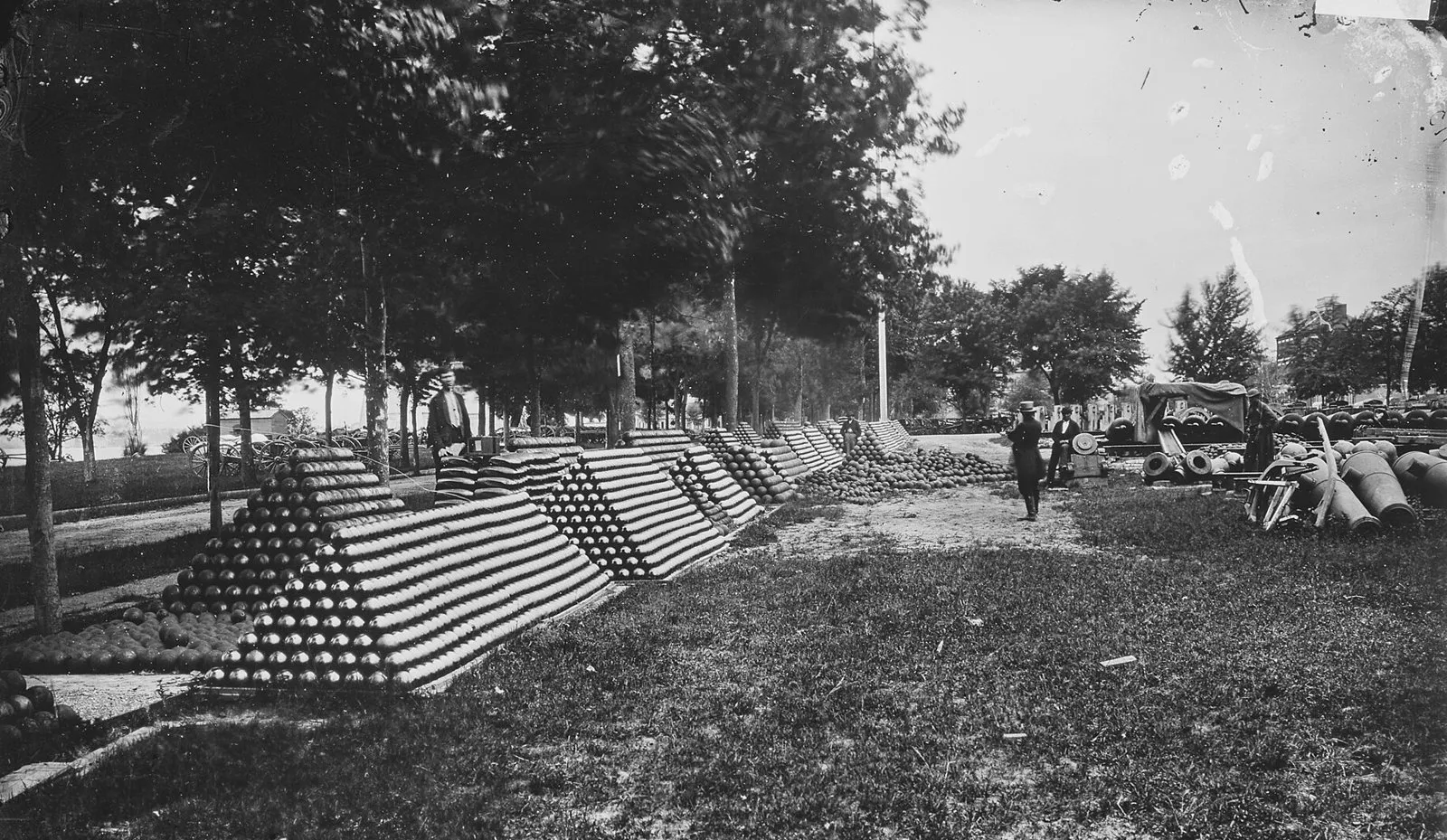
Cannonballs stacked in pyramids, photographed by Mathew Brady’s studio around 1860–65. Kepler’s question about packing spheres grew out of one about stacking cannonballs. US National Archives. Public domain, via Wikimedia Commons.

Normally, Hartnett says, mathematicians trust a proof through a social process: they know the author, follow the main argument, and don’t check every line. A proof checker like Lean replaces that with a certificate. A small, trusted program confirms every step, so strangers, even high-school students, can contribute to a project without anyone checking their work by hand.
But a certificate is not understanding. The podcast’s host, Tim Scarfe, compares AI proofs to Hales’s: long, case by case, and “a bit like spaghetti”. Hartnett judges a proof partly by whether it creates new concepts others can use, as Andrew Wiles’s proof of Fermat’s Last Theorem did. Hales’s did not. The mathematician Paul Lessard puts the objection plainly: “I’m still the one who has to understand it.” And a checked proof can still prove the wrong thing. Lean confirms the steps, not that the statement says what we meant. “The trust has basically moved upstream,” Scarfe says.
That is the gap in OpenAI’s Navier–Stokes proof: checked by Lean, and still poorly explained. It may be correct and still teach us little. The Erdős proof was the opposite: readable, and elegant enough to admire.
Terence Tao makes the same point with a better image. In an interview with New Scientist in October, he said that working on a hard problem used to be like picking fruit: you plant the seeds and more trees grow. OpenAI’s Navier–Stokes proof was “like strip mining the landscape. You get all the fruits, but then the landscape is barren afterwards.” He accepts that the proof is correct. But “we’ve learned almost nothing mathematically.”
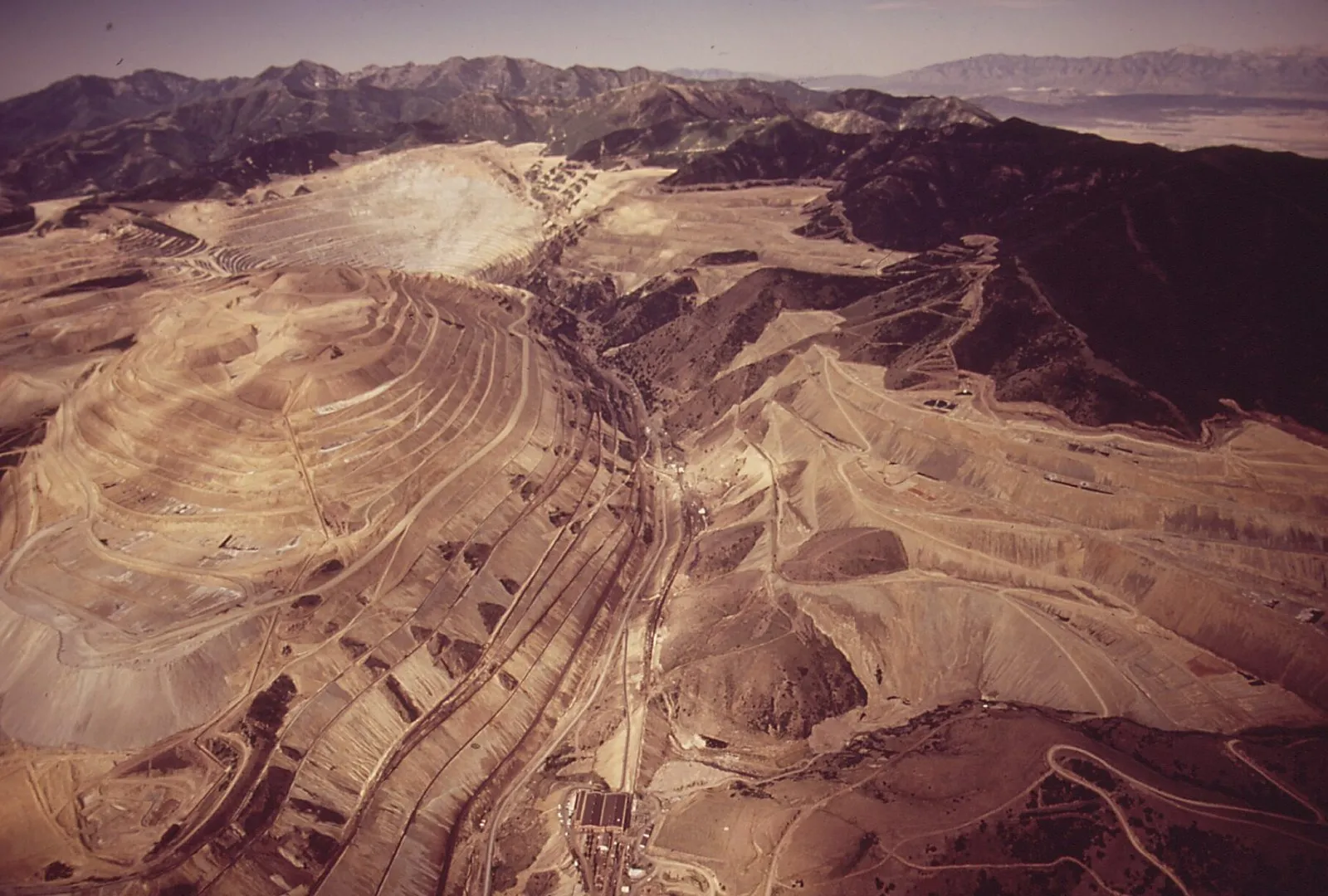
The Kennecott open-pit copper mine near Salt Lake City, Utah, photographed by Bruce McAllister in July 1972 for the EPA’s Documerica project. US National Archives. Public domain, via Wikimedia Commons.

So what then would mathematicians’ future role be? Choosing what to aim at. Scarfe puts it most sharply: “The checker certifies the derivation, but it doesn’t certify the human choice of target.” And politics, says Tao. Mathematicians should work out how to bring AI into maths in a way that builds the field. Today it is brute force by the labs, thrown at problems to see which fall. But mathematicians should be setting the rules. Maths needs new practices for doing research responsibly, so that solving a problem leaves a field that can grow for the benefit of humans.
What AI and maths teach us about AI, writing and code
So what wider deductions can we make from the developments in maths and AI? Maths separates two jobs that writing and code blur together: solving a problem, and choosing which problems are worth solving. AI has become very good at the first. The evidence for the second is thin. It did not pose the Erdős problem or the Navier–Stokes question; it answered them. And if the launch-party guess is right, left to the basic rules it would wander off into true but dull maths. Wolfram explains why. Goals must come “from ‘outside the system’”: in technology from what people find useful, in science from what we observe, in pure maths from the choices of mathematicians. An AI that picks a direction at random, or copies the statistics of past human choices, gives “no reason for humans to care” about where it ends up.
Code and writing have the same split, and it answers the questions I started with. AI can now write code that works and prose that is eloquent. That is solving. A lucid long argument, or software people truly use, is the other job: deciding what to build and for whom, what to say and in what order. That is the steering, and it is where I still find I add something.
Could AI learn to steer? It can learn from what people liked before, and from what they click on and use. But that is either copying past human choices, which Wolfram says gives us no reason to care, or chasing a score. Useful software starts from what a particular person needs now. A good essay starts from a question worth asking. Both come from outside the system, from us.
Perhaps one release will change all this. The question for code and writing is the same as for maths: not whether AI can produce it, but whether it knows what is worth producing, and for whom. For now, that is still our job.